How Small Senior Care Houses Reduce Isolation While Assisting with ADLs
Business Name: BeeHive Homes of Amarillo
Address: 5800 SW 54th Ave, Amarillo, TX 79109
Phone: (806) 452-5883
BeeHive Homes of Amarillo
Beehive Homes of Amarillo assisted living is ideal for those who value their independence but require help with some of the activities of daily living. Residents enjoy 24-hour support, private bedrooms with baths, medication monitoring, home-cooked meals, housekeeping and laundry services, social activities and outings, and daily physical and mental exercise opportunities. Beehive Homes memory care services accommodates the growing number of seniors affected by memory loss and dementia. Beehive Homes offers respite (short-term) care for your loved one should the need arise. Whether help is needed after a surgery or illness, for vacation coverage, or just a break from the routine, respite care provides you peace of mind for any length of stay.
5800 SW 54th Ave, Amarillo, TX 79109
Business Hours
Families seldom call me since of medication schedules or shower difficulties. They call because a parent is alone, not eating well, missing out on visits, and silently losing interest in life. The Activities of Daily Living, or ADLs, are generally the visible issue. Isolation is the part that keeps them up at night.
Small senior care homes, in some cases called residential care homes or board-and-care homes, sit at the crossway of these two truths. They provide hands-on aid with bathing, dressing, toileting, transfers, and meals, yet they feel closer to an extended family household than a facility. For many years, I have actually seen these smaller settings change the trajectory for older adults who had nearly given up, especially those who struggled in larger assisted living communities.
This is not magic. It originates from scale, style, and practices of every day life that are much more difficult to maintain in a structure with a hundred doors and a rotating cast of staff.
The peaceful cost of isolation in late life
Loneliness in older grownups is not simply "feeling a bit down." Research study has actually regularly connected persistent social seclusion with higher dangers of dementia, anxiety, falls, and hospitalization. I have dealt with senior citizens who technically had every service lined up - home health, meal delivery, weekly house cleaning - yet they still declined because they invested 22 hours a day alone in a recliner.
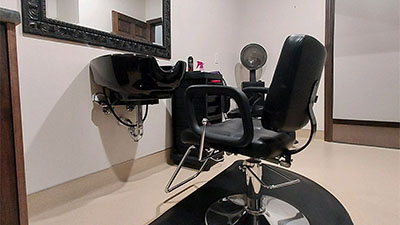
ADLs and loneliness feed each other. When self-care becomes hard, people withdraw. They may skip gatherings to prevent the shame of incontinence or requiring assist with transfers. They stop preparing because it feels overwhelming, then reduce weight and energy, that makes it even harder to go out. Eventually, a once-social individual can appear like a "homebody" or "stubborn" when the genuine concern is that independence has become too heavy to bring alone.
Any serious senior care plan needs to resolve both sides: practical assistance with ADLs and meaningful human connection. Small care homes are built in a manner in which makes that mix more natural.
What "small senior care home" really means
Families sometimes confuse senior care terms, so it helps to be clear. A small care home is normally a home in a residential neighborhood that has actually been licensed to provide elderly care to a minimal number of residents, often between 4 and 10. Regulations and names differ by state. These homes sit someplace in between conventional assisted living and one-on-one home care.
They are not nursing homes. Most do not offer intricate medical interventions or on-site physicians. Rather, they focus on individual care, safety, medication management, and daily assistance. Residents might require aid with bathing, dressing, and medication reminders, or they may need hands-on support with transfers and toileting.
I frequently describe small homes in this manner: think of if you took the "care" part of assisted living and put it inside a regular home, with a small census and shared living spaces. That structure changes almost whatever about how loneliness and ADLs are handled.
Why larger settings frequently fight with loneliness
Large assisted living neighborhoods play a crucial function, and for some elders they are an outstanding fit. I have actually seen outgoing, independent locals thrive in those environments, attending lectures, fitness classes, and trips several times a week.
Yet the exact same structures can feel extremely lonesome for others. The factors are seldom about bad objectives. They have to do with scale.
When there are a hundred homeowners, even a strong activities program can not reach everyone in a meaningful way every day. Staff members are extended across long corridors. The dining room can feel like a restaurant where you do not know anybody. Someone who moves slowly or has hearing loss may sit at the edge of the action, physically present however socially separate.
ADL assistance can likewise become job oriented. Staff have a list: shower Mrs. J, gown Mr. K, give medication to space 204. Under pressure, it is appealing to move rapidly and skip the small talk that makes someone feel seen. For a resident who already lost a spouse, home, and driving benefits, that loss of personal connection during care can deepen a sense of being "processed" rather than cared for.
By contrast, small senior care homes have an integrated benefit. When you deal with 5 or six other individuals and see the same caregivers daily, it is hard to remain invisible.
How small homes weave ADL assistance into daily life
One of the very first things households observe when they walk into a good small care home is the rhythm. There is generally a smell of food rather of disinfectant. You hear a tv or soft music from the living space, not a paging system. Citizens may be in the kitchen area chatting with personnel while lunch is prepared.
This environment matters due to the fact that it alters how ADL help shows up in the day.
Instead of caretakers "arriving" at a space at scheduled times, they are around, part of the backdrop. Aid with ADLs becomes more fluid. A resident having a hard time to button a shirt might call out from their bed room, and the caretaker can react instantly because they are just a couple of steps away, not at the end of a long corridor with ten other call lights.
Assistance tends to be broken into natural moments:
First, early morning routines frequently happen in a staggered style, directed by the resident's pattern instead of a rigorous schedule. Someone who always woke up early can still rise at 6:30, have coffee in a peaceful kitchen area, and after that accept aid with bathing when they feel ready.
Second, meals are generally cooked in the home cooking area, which opens social opportunities. Homeowners might assist set the table or chop soft veggies with adapted tools. Even those who are too frail to take part still see, odor, and hear the process. The line between "mealtime" and "social time" blends, which decreases both malnutrition and loneliness.
Third, small, frequent check-ins end up being natural. Since the caregiver sees each resident throughout the day, they can notice when somebody is abnormally withdrawn, avoiding dessert, or remaining in bed. These tiny observations amount to early intervention for anxiety or medical issues.
The very same hands-on support that keeps somebody safe in the shower can be a point of decent discussion, shared jokes, or peaceful peace of mind. That is much easier to maintain when personnel are not continuously rushing to the next doorway.
The power of scale: knowing everyone by name and story
I am always careful of any senior care company who speaks in generalities about "our citizens" however can not tell you much about individuals. In a small home, that is nearly difficult. With 6 or 8 locals, their histories and preferences enter into the fabric of the house.
Caregivers tend to understand which resident grew up on a farm, who sang in a church choir, and who worked night shifts and hated mornings for 40 years. These information are not trivia. They direct how ADLs are approached.
For example, I when dealt with a gentleman who had actually been a machinist. He disliked having others button his shirt, although arthritis in his hands made it tough. In a small care home, personnel had adequate time and familiarity to adjust. They bought shirts with bigger buttons and slightly stiffer fabric, then gave him extra time and persistence, talking to him about the accuracy of his work rather of demanding "effectiveness." He accepted the help since it honored his identity, not simply his practical limitations.
That level of personalization is harder in a building with a large census and personnel turnover. When everybody knows each other's names, small jokes, and routines, casual interaction fills the day. Solitude shrinks not through huge activity calendars, however through layers of easy, human moments.
Shared areas, shared routines
Architecturally, small senior care homes are closer to family homes. There is typically a common living-room, a table you can really see individuals across, and frequently an accessible backyard or patio area. The majority of the day happens in these shared spaces, not behind closed doors.
This setup has quiet however powerful effects.
A resident with mild cognitive disability might forget invites to activities, however they do not have to keep in mind where the living room is. They are already there, seeing others reoccur, naturally drawn into whatever is occurring. If an employee starts folding laundry at the table, homeowners drift in to help or chat.
Structured activities, when they happen, are most likely to be small scale: baking cookies, arranging photos, watering plants, listening to music. For somebody who feels overwhelmed by a huge group activity room, this intimacy can be more inviting.
Support with ADLs is built into these shared routines. A caregiver may assist homeowners wash hands before lunch, stroll them from chair to table, adjust seating for safety, and monitor consuming, all while continuing common discussion. This blurs the distinction between "care time" and "life time." It is much more difficult for solitude to take hold when meaningful activities and casual friendship surround the useful support.
Staff connection and authentic relationships
One constant distinction between small homes and larger centers is personnel turnover and connection. Small homes frequently have a core team that has worked there for several years. The exact same three or four caregivers rotate through shifts, doing everything from personal care to light housekeeping and meal preparation.
This continuity allows relationships to deepen. When the exact same person helps you shower, dress, and manage incontinence week after week, you build trust. That trust is not abstract. It appears when a resident who as soon as declined showers because of shame gradually relaxes, jokes about the water temperature level, and stops resisting. It appears when somebody confides about pain, unhappiness, or fear rather of hiding it.
It also matters for households. When they visit, they see familiar faces, not a new complete stranger each week. Conversations about changes in movement, hunger, or state of mind are richer due to the fact that caretakers have seen the resident hour by hour, not just check out a chart.
This web of long-term relationships is one of the greatest remedies to isolation. An older grownup may still grieve a spouse or miss their old home, however they are no longer isolated in their experience. They come from a small, continuous social system that notices when they are not themselves.
Autonomy, self-respect, and the psychology of requesting help
Many older grownups resist assisted living or other types of senior care due to the fact that they are horrified of losing self-reliance. They fret that once they request for aid with one ADL, they will be treated as powerless in all elements of life.
Small care homes can soften that worry. With fewer homeowners to keep track of, personnel can adjust assistance more finely. Somebody might receive full assistance with bathing however only standby help when transferring from bed to chair. Another might manage their own grooming but require tips and cues for wearing the right order.
Crucially, the environment feels less institutional. Wearing a bathrobe in the hallway, keeping a preferred mug by the sink, or having family pictures on the wall all signal that this is a home, not a unit.
Residents typically feel less embarrassed to request for help in a setting that looks domestic. Accepting a caretaker's arm on the way to the dining table is more tasty than pressing a call button in a long corridor and waiting while other alarms ring. That simpler access to support prevents physical accidents and likewise prevents the loneliness that comes from withdrawing to avoid humiliating situations.
I have actually seen residents emerge socially over a couple of months simply because they no longer fear a fall on the method to the restroom or an incontinence episode at dinner. When the mechanics of daily life feel safer and more foreseeable, emotional energy appears for conversation, hobbies, and connection.
The function of respite care and transition periods
Not every household is all set for an irreversible move into a care setting. There are likewise seniors who insist on staying at home but show clear signs of social and practical decrease. In these cases, short-term remain in a small care home as respite care can serve several purposes.
First, respite remains offer primary caretakers a break to rest, travel, or attend to their own health. That alone can minimize the stress that in some cases toxins household relationships. Second, and frequently underrated, respite care in a small home shows the older adult what supported living can seem like when it is done well.
I dealt with a child whose father had actually declined every form of assisted living. He consented to "a few days" of respite while she had surgery. In the small home, he discovered a fellow veteran at the breakfast table and discovered that the caretaker shared his love of baseball. The truth that someone cheerfully assisted him with socks and showering every early morning turned from embarrassment into a running group joke about "pit team service."
He went back home after two weeks, however the ice had broken. Six months later, when his mobility worsened, he picked that very same small home himself. It was no longer an abstract loss of self-reliance. It was a specific location with faces, routines, and relationships he already knew.
Used this way, respite care ends up being not senior care just an assistance for the family but likewise a tool to minimize fear-based isolation.
Limitations and trade-offs of small care homes
Small is not automatically much better. There are compromises that families require to weigh honestly.
Medical intricacy is one. If somebody needs continuous nursing supervision, ventilator assistance, or complex wound care, a nursing home or specialized setting may be more secure. Not all small homes have the staffing or licensure to manage sophisticated requirements, and some might rely greatly on outside home health agencies.
Cost is another element. In some markets, small homes are similar to mid-range assisted living, specifically when you consider higher care levels. In others, they may be more costly since of their staff-to-resident ratio and the absence of economies of scale. Families should look closely at what is consisted of and what sets off greater fees.
Social design matters too. An incredibly extroverted resident who prospers on big events, live shows, and group outings may feel restricted by a small peer group. On the other hand, somebody with significant anxiety or sensory sensitivity might find the small environment deeply calming.
Geography can be difficult. Not every town has well-regulated small care homes, and quality can vary extensively. Licensing requirements differ by state, so families should do mindful research study instead of assume all "homes" operate with the exact same standards.
Recognizing these trade-offs keeps expectations realistic. For the right individual, however, the benefits for both ADL support and isolation can far outweigh the downsides.
Signs that a small senior care home may fit your relative
Here is a brief, practical method to think about fit:
- Your relative needs everyday aid with a minimum of one or two ADLs, but does not need 24 hour nursing or medical facility level care.
- They appear overloaded or withdrawn in large groups and choose quieter, more familiar environments.
- Loneliness or seclusion in the house is a major concern, even if home care services are currently in place.
- Family caregivers are stretched thin and need relief, yet want their loved one to stay in a setting that feels more like a home than a facility.
- Consistency of staff and a low staff-to-resident ratio are high top priorities for you and your family.
These are not rigid criteria, simply patterns I see in families who eventually state, "This type of home is precisely what we required."
Questions to ask when exploring small care homes
When you visit prospective homes, move beyond brochures and try to find the everyday truth. A couple of targeted concerns can expose a lot:
- Who will actually be helping my loved one with bathing, dressing, and toileting, and how long have they worked here?
- What does a normal day appear like for residents who are less social or who have mobility challenges?
- How do you discover and respond when someone starts isolating in their room or refusing meals?
- How lots of locals are here, and what is the personnel protection throughout the day, evenings, and nights?
- Can you tell me about a resident who was lonely when they got here and how you supported them over time?
The way personnel response is as crucial as the responses themselves. Try to find specific stories, not unclear peace of minds. Notification whether residents appear relaxed, engaged, and appropriately groomed. Take notice of small information like eye contact, intonation, and whether someone walking slowly to the bathroom gets calm, client support.
Bringing it together: safety with authentic connection
At its best, senior care provides more than security. It offers a method back into life for individuals who have been slowly pressed to the margins by illness, bereavement, and functional decrease. Small senior care homes are among the clearest examples of this possibility.
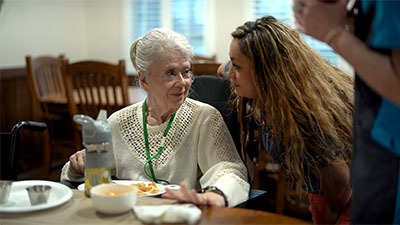
By keeping the census low, they permit staff to move beyond task lists into true relationships. By embedding ADL support into shared routines in a real home, they transform aid with bathing, dressing, and meals into touchpoints of human contact rather of suggestions of loss. By prioritizing consistency and familiarity, they decrease both the useful dangers and the psychological strain of late life.
Not every older grownup will pick a small home. Not every area uses them. Yet for numerous families who feel caught in between unsafe independence in your home and impersonal large centers, these residential alternatives open a 3rd course: one where support with ADLs and the battle against isolation are not different objectives, but parts of the same common, shared days.
BeeHive Homes of Amarillo provides assisted living care
BeeHive Homes of Amarillo provides memory care services
BeeHive Homes of Amarillo provides respite care services
BeeHive Homes of Amarillo supports assistance with bathing and grooming
BeeHive Homes of Amarillo offers private bedrooms with private bathrooms
BeeHive Homes of Amarillo provides medication monitoring and documentation
BeeHive Homes of Amarillo serves dietitian-approved meals
BeeHive Homes of Amarillo provides housekeeping services
BeeHive Homes of Amarillo provides laundry services
BeeHive Homes of Amarillo offers community dining and social engagement activities
BeeHive Homes of Amarillo features life enrichment activities
BeeHive Homes of Amarillo supports personal care assistance during meals and daily routines
BeeHive Homes of Amarillo promotes frequent physical and mental exercise opportunities
BeeHive Homes of Amarillo provides a home-like residential environment
BeeHive Homes of Amarillo creates customized care plans as residents’ needs change
BeeHive Homes of Amarillo assesses individual resident care needs
BeeHive Homes of Amarillo accepts private pay and long-term care insurance
BeeHive Homes of Amarillo assists qualified veterans with Aid and Attendance benefits
BeeHive Homes of Amarillo encourages meaningful resident-to-staff relationships
BeeHive Homes of Amarillo delivers compassionate, attentive senior care focused on dignity and comfort
BeeHive Homes of Amarillo has a phone number of (806) 452-5883
BeeHive Homes of Amarillo has an address of 5800 SW 54th Ave, Amarillo, TX 79109
BeeHive Homes of Amarillo has a website https://beehivehomes.com/locations/amarillo/
BeeHive Homes of Amarillo has Google Maps listing https://maps.app.goo.gl/avxAXn336jPCWXwv7
BeeHive Homes of Amarillo has Facebook page https://www.facebook.com/BeehiveAmarillo/
BeeHive Homes of Amarillos has YouTube channel https://www.youtube.com/@WelcomeHomeBeeHiveHomes
BeeHive Homes of Amarillo won Top Assisted Living Homes 2025
BeeHive Homes of Amarillo earned Best Customer Service Award 2024
BeeHive Homes of Amarillo placed 1st for Senior Living Communities 2025
People Also Ask about BeeHive Homes of Amarillo
What is BeeHive Homes of Amarillo Living monthly room rate?
The rate depends on the level of care that is needed. We do an initial evaluation for each potential resident to determine the level of care needed. The monthly rate is based on this evaluation. There are no hidden costs or fees
Can residents stay in BeeHive Homes of Amarillo until the end of their life?
Usually yes. There are exceptions, such as when there are safety issues with the resident, or they need 24 hour skilled nursing services
Does BeeHive Homes of Amarillo have a nurse on staff?
No, but each BeeHive Home has a consulting Nurse available 24 – 7. if nursing services are needed, a doctor can order home health to come into the home
What are BeeHive Homes of Amarillo visiting hours?
Visiting hours are adjusted to accommodate the families and the resident’s needs… just not too early or too late
Do we have couple’s rooms available?
Yes, each home has rooms designed to accommodate couples. Please ask about the availability of these rooms
Where is BeeHive Homes of Amarillo located?
BeeHive Homes of Amarillo is conveniently located at 5800 SW 54th Ave, Amarillo, TX 79109. You can easily find directions on Google Maps or call at (806) 452-5883 Monday through Sunday 9:00am to 5:00pm
How can I contact BeeHive Homes of Amarillo?
You can contact BeeHive Homes of Amarillo Assisted Living by phone at: (806) 452-5883, visit their website at https://beehivehomes.com/locations/amarillo, or connect on social media via Facebook or YouTube
Residents may take a trip to the Texas Air & Space Museum. The Texas Air & Space Museum provides aviation history that makes for an inspiring assisted living and memory care outing during senior care and respite care activities.